Archaeological Site
🚗 40 min by car · ₹600–800 taxi from Glamour Palace
Barabar Caves
Oldest surviving rock-cut caves in India · 3rd century BCE
The Barabar Caves are the oldest surviving rock-cut caves in India, carved during the reign of Emperor Ashoka in the 3rd century BCE. Polished to a mirror finish that still dazzles after 2,300 years, these four granite caves were donated by Ashoka to the Ajivika sect of monks. They also inspired E.M. Forster's novel A Passage to India (the fictional Marabar Caves).
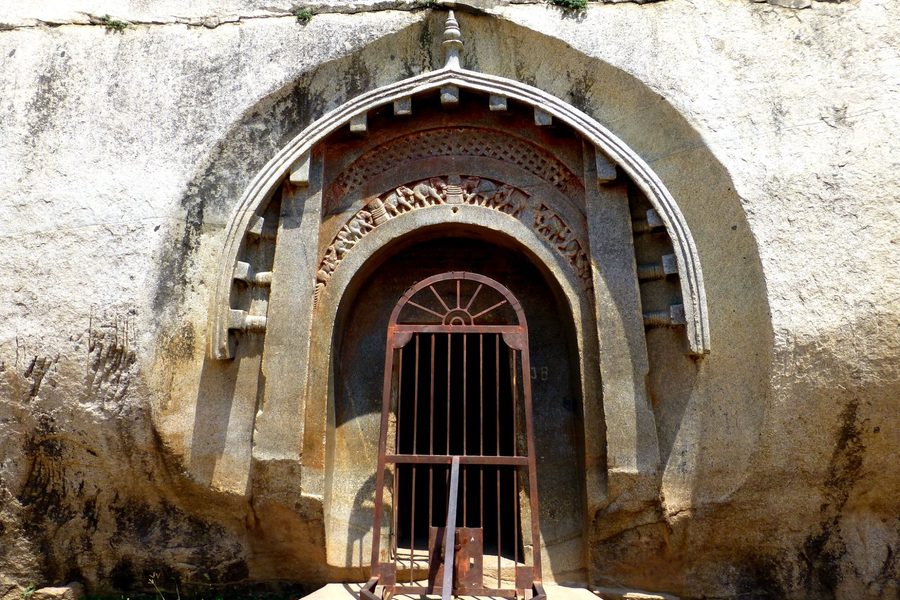
The four Barabar caves — Lomas Rishi, Sudama, Vishwakarma, and Karna Chaupar — were carved from solid granite during the Mauryan period (3rd century BCE). The interiors were polished to a mirror-like finish using techniques that remain impressive today. Ashoka's inscriptions inside several caves dedicate them to the Ajivika ascetics. The Lomas Rishi cave has an elaborately carved entrance facade depicting a row of elephants approaching a Buddhist chaitya window — one of the finest examples of early Indian sculpture. The caves are located in the Jehanabad district and require a trek through forested hills. E.M. Forster visited in 1912 and was inspired to write A Passage to India (1924), in which the fictional Marabar Caves play a central role.